Article written for Vijay Times CIRCA 10 October 2003, 01:27:34
Marathis in Karnataka
Karnataka has been the socio-cultural hub for many years starting from the time of Vijayanagara till the time of Bendakaluru. Kannadigas have been known to welcome and accept new creeds into their lives. One of the oldest communities is that of Marathas who have been part and parcel of our lives from hundreds of years.
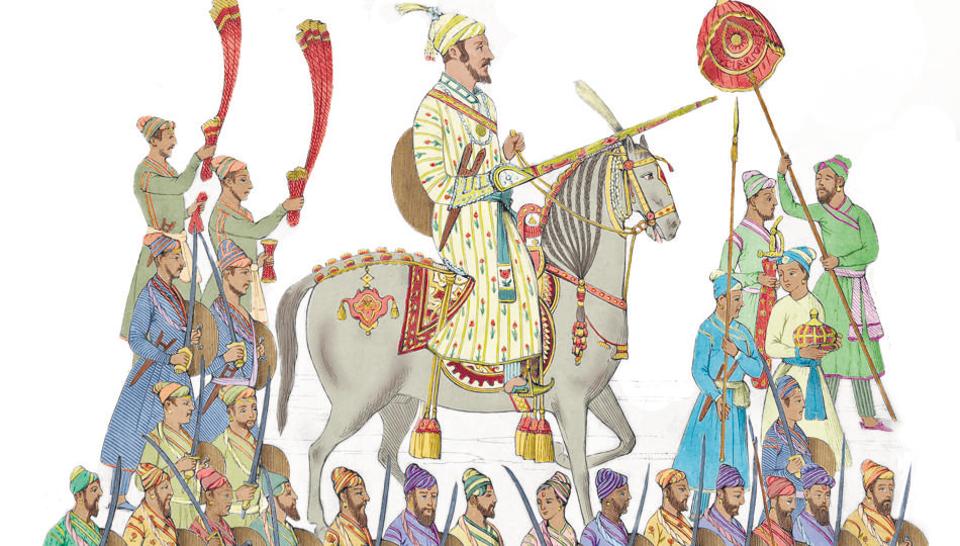
The history dates back to the Marathi's inscription at Shravanabelagola, which is found at the foothill of the statue. Then during Shivaji Maharaj's time his brother Shah Ji who came in to Bangalore and then moved on to Tanjore and lived his complete life there. His army and court men who stayed in Bangalore never got any instruction from their superiors to go back so they stayed on and the first major influx of Marathi's was on the history books. The Bangalore presence can be seen in the stone inscription in the Kadu Malleshwara Temple in Malleshwaram.
Mr. Sudarshan Rao, from Maharashtra Mandal office in Gandhinagar, has a view that the Marathis who have been staying here for a long time have merged with the Kannada population and the only difference between the creeds is that the Marathis speak Marathi at home and not Kannada.
 |
| Pic: Hindustan Times |
There has been huge influx of Marathi culture in the northern states of Karnataka like Hubli & Dharwad, Gulbarga, Belagaum, Bijapur where Marathi is the unofficial second language. The fight for these regions was a raging political issue few years back. It has calmed down a little over the years and hope the co existence stays as it has been for hundreds of years.
Maharastra also hugely influences the dress and socio-cultural practices in this region. The universal feeling all through the state is that Kannadigas are warm, friendly and homely people!
The Mitra Mandals uphold the Maharashtrian culture and heritage with various celebrations, programmes, literary discussions, dramas, classical music performances, and so on. There are many organisations in Bangalore like Maharashtra Mandal an 80-year-old society functioning from its building in Gandhinagar. The other notable big Maratha organisations are Sneha Dhara, Indiranagar Maharashtra Mandal, Stree Shakthi Mandal, Yuva Marathi Sangh, Marathi Jestha Nagarik Mandal etc. The new generation Mandals are even online in prominent e groups and also web pages like www.marathiclub.com Main festivals of Marathi's include the all famous Ganesha and Diwali.
The corresponding Kannada festivals like Sankranti and Ugadi have been part and parcel of the festive lives of Marathi's in Bangalore. The professions they chose are many but the major practices are Architecture, Real Estate and the new age Marathis are all behind the monitors in major IT companies.
The language of Marathis is of many folds in Karnataka. There are bits of population who speak the Kannadised Marathi and also there is a sizable population of Maratis who are from Tanjore. The current generation of Maratis who have come in recent decades speak the pure Marathi which is ongoing in Maharstra right now. There have been always arguments of which one is the purest of them all which is a case argued proudly by all the different sub dialect Marathis in the state.
Mrs. Jyothi Sathe, Editor of a Marathi Journal SNVV (Saprem Namaskar Vinanthi Vishesh) had to say, "Marathis have always been hardworking, enterprising, friendly, co-operative and all the good adjectives used for praising people will go well with Marthis. All Marathis are proud to be Indian first and then Marathis".
There have been many important people from Marathi society who made it big in Karnataka. To name a few R V Deshpande, P G R Scindhya, Kirloskars, Jagadales, Khodays, Harsha Bhogle, Rahul Dravid, Bhemsen Joshi and many more. Ms. Saraswati Risbud has even won Rajyothsava award for translating Marathi work into Kannada.
Arundati Rao, famous theatre personality said "Except for the language and nine yard sari there has been no difference between that Marathi's and Kannadigas in Karnataka. But the history of friendliness between two communities stands as an example for unity in diversity".
Ending this piece being a husband of a Marthi woman I really feel the power of having the perfect and efficient house runner and assistant I could get. I am really proud of the culture I am associated with and as my favourite term in Marthi "Tabadtob" which means quickly stating them as one of the adjective opulent populations of India.
P D Sathish Chandra
Comments
Post a Comment
Tell me what you think...